Stack
Glow peptide FDA status in 2026: none of GHK-Cu, BPC-157 or TB-500 is approved; what the July PCAC votes and August warning letters changed.
On 23 July 2026, FDA's Pharmacy Compounding Advisory Committee voted 8-6, with one abstention, to recommend BPC-157 and TB-500 for the 503A bulks list, and it did not vote on GHK-Cu at all. Those two facts sum up glow peptide FDA status in 2026: none of the three parts of the GLOW Stack is approved, two have a non-binding recommendation, and the third is still waiting for review.
I follow FDA's peptide actions closely because they decide which vendors stay open and what they can say. This page sets out the status of each component, what the 2026 votes changed and did not change, and what comes next. Everything in the GLOW Stack is sold for research use only and labelled not for human consumption.
GHK-Cu, BPC-157 and TB-500 are not FDA-approved drugs, and the glow peptide stack as a combination has no FDA status of any kind. "Glow" is a vendor's product name, not something FDA reviews.
The one partial exception is GHK-Cu in topical cosmetics. Creams and serums containing it are regulated as cosmetics, which is a different category from drugs. Injectable GHK-Cu is not approved. We break down the two forms on topical vs injectable GHK-Cu.
The three parts of the stack sit at different points in FDA's process. This table shows where each stood as of late 2026.
| Step | BPC-157 | TB-500 | GHK-Cu |
|---|---|---|---|
| FDA-approved drug | No | No | No (topical cosmetic use is regulated as a cosmetic) |
| Category 2, September 2023 | Yes | Yes | Not in the facts we track |
| PCAC vote, July 2026 | Recommended, 8-6, 1 abstention | Recommended, 8-6, 1 abstention | Not voted on |
| Added to 503A bulks list | No | No | No |
| Named in August 2026 warning letters | No | No | No |
| WADA Prohibited List | Yes | Yes (thymosin beta-4 and fragments) | Not listed in our sources |
The July 2026 votes were recommendations, not decisions. The committee advised FDA to add six peptides to the 503A bulks list, the list of substances compounding pharmacies may use: BPC-157, TB-500, KPV and MOTS-c on 23 July, then epitalon and semax on 24 July. It voted against emideltide.
FDA still has to make its own decision and then go through proposed and final rulemaking with public comment. As of the July meeting, none of the six had been added, and compounding them was not yet permitted. For buyers of the GLOW Stack, that means nothing has changed in practice: the vials are still research chemicals.
A split vote of 8-6 is also worth reading carefully. It signals real disagreement on the committee about the evidence, which matches what we see in the literature: mostly animal research and small uncontrolled human studies. Our BPC-157 page covers that literature in more detail.
GHK-Cu is scheduled for committee review before February 2027, alongside Melanotan II, LL-37, dihexa and PEG-MGF. Until then, its glow peptide FDA position is simply undecided at the compounding level.
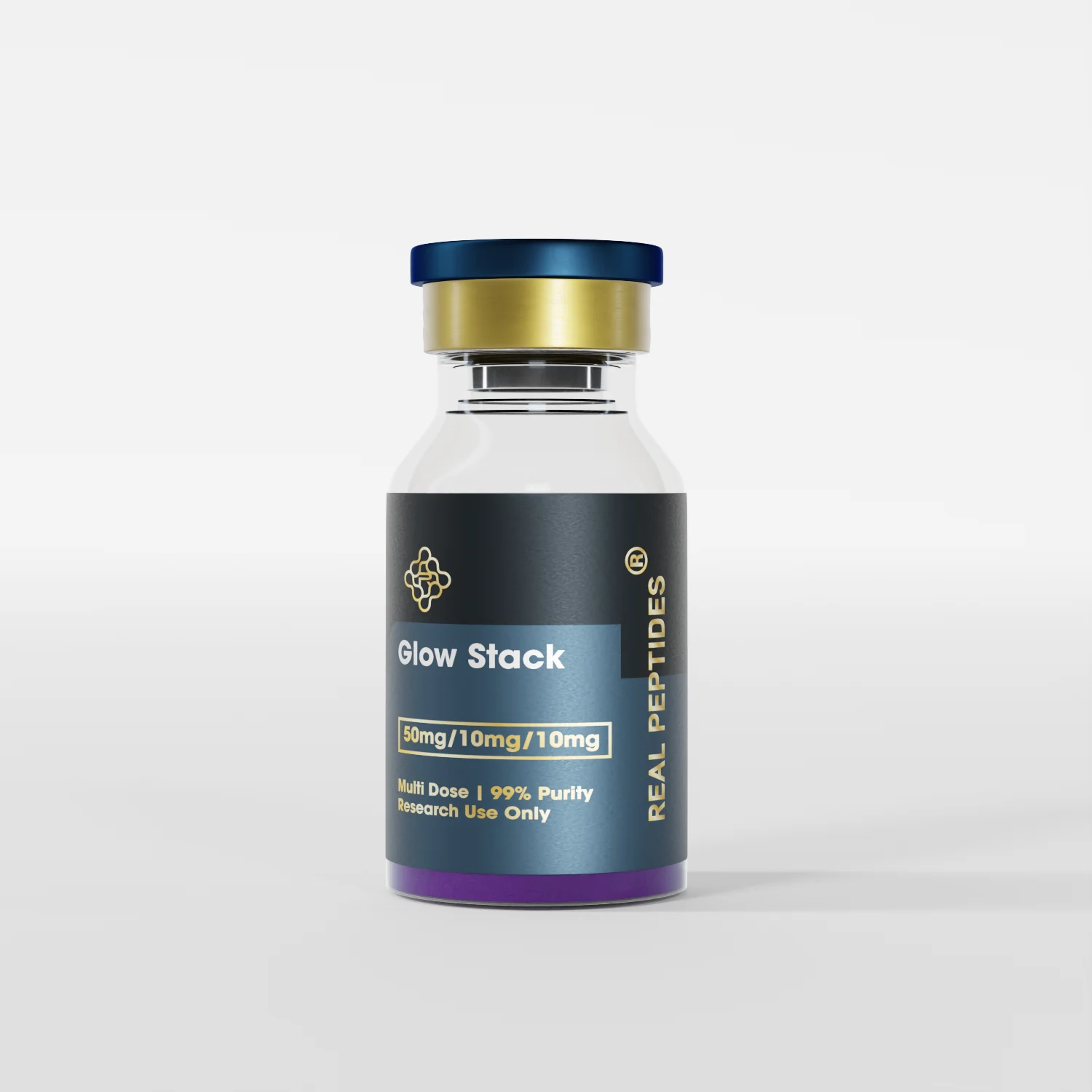
That makes the GLOW Stack regulatorily uneven. Two of its vials have a recommendation on record; the largest vial, the 50 mg GHK-Cu, has none yet. Anyone tracking the stack should watch that review. We cover the compound on the GHK-Cu peptide guide.
On 24 August 2026, FDA sent warning letters to five online peptide vendors for selling unapproved new drugs. Products named included semaglutide, tirzepatide, retatrutide, tesamorelin, SS-31, PT-141, survodutide, mazdutide and bacteriostatic water.
The important part was FDA's reasoning. It said "research use only" labels do not decide the question and that it looks at the whole website. Disease claims, dosing guidance, reconstitution calculators and bacteriostatic water sold beside injectables were treated as evidence of intended human use. None of the GLOW components was named, but the same standards apply to any site selling them, which is why we publish no dosing or preparation content.
Three things could move the glow peptide FDA picture in the next year, and none has happened yet:
Even if compounding is eventually permitted, that would cover pharmacies working from prescriptions, not research vials sold online. We will update this page as each step happens; prices and vendor terms are on where to buy glow peptide.
On 23 July 2026, FDA's Pharmacy Compounding Advisory Committee voted 8-6, with one abstention, to recommend BPC-157 and TB-500 for the 503A bulks list, and it did not vote on GHK-Cu at all. Those two facts sum up glow peptide FDA status in 2026: none of the three parts of the GLOW Stack is approved, two have a non-binding recommendation, and the third is still waiting for review.
I follow FDA's peptide actions closely because they decide which vendors stay open and what they can say. This page sets out the status of each component, what the 2026 votes changed and did not change, and what comes next. Everything in the GLOW Stack is sold for research use only and labelled not for human consumption.
GHK-Cu, BPC-157 and TB-500 are not FDA-approved drugs, and the glow peptide stack as a combination has no FDA status of any kind. "Glow" is a vendor's product name, not something FDA reviews.
The one partial exception is GHK-Cu in topical cosmetics. Creams and serums containing it are regulated as cosmetics, which is a different category from drugs. Injectable GHK-Cu is not approved. We break down the two forms on topical vs injectable GHK-Cu.
The three parts of the stack sit at different points in FDA's process. This table shows where each stood as of late 2026.
| Step | BPC-157 | TB-500 | GHK-Cu |
|---|---|---|---|
| FDA-approved drug | No | No | No (topical cosmetic use is regulated as a cosmetic) |
| Category 2, September 2023 | Yes | Yes | Not in the facts we track |
| PCAC vote, July 2026 | Recommended, 8-6, 1 abstention | Recommended, 8-6, 1 abstention | Not voted on |
| Added to 503A bulks list | No | No | No |
| Named in August 2026 warning letters | No | No | No |
| WADA Prohibited List | Yes | Yes (thymosin beta-4 and fragments) | Not listed in our sources |
The July 2026 votes were recommendations, not decisions. The committee advised FDA to add six peptides to the 503A bulks list, the list of substances compounding pharmacies may use: BPC-157, TB-500, KPV and MOTS-c on 23 July, then epitalon and semax on 24 July. It voted against emideltide.
FDA still has to make its own decision and then go through proposed and final rulemaking with public comment. As of the July meeting, none of the six had been added, and compounding them was not yet permitted. For buyers of the GLOW Stack, that means nothing has changed in practice: the vials are still research chemicals.
A split vote of 8-6 is also worth reading carefully. It signals real disagreement on the committee about the evidence, which matches what we see in the literature: mostly animal research and small uncontrolled human studies. Our BPC-157 page covers that literature in more detail.
GHK-Cu is scheduled for committee review before February 2027, alongside Melanotan II, LL-37, dihexa and PEG-MGF. Until then, its glow peptide FDA position is simply undecided at the compounding level.
That makes the GLOW Stack regulatorily uneven. Two of its vials have a recommendation on record; the largest vial, the 50 mg GHK-Cu, has none yet. Anyone tracking the stack should watch that review. We cover the compound on the GHK-Cu peptide guide.