Stack
Glow peptide benefits, component by component: what lab and animal research on GHK-Cu, BPC-157 and TB-500 shows, and what no human trial has tested.
In published research, the majority of participants tolerated supplementation without serious adverse events. Most side effects were mild, transient, and self-resolving.
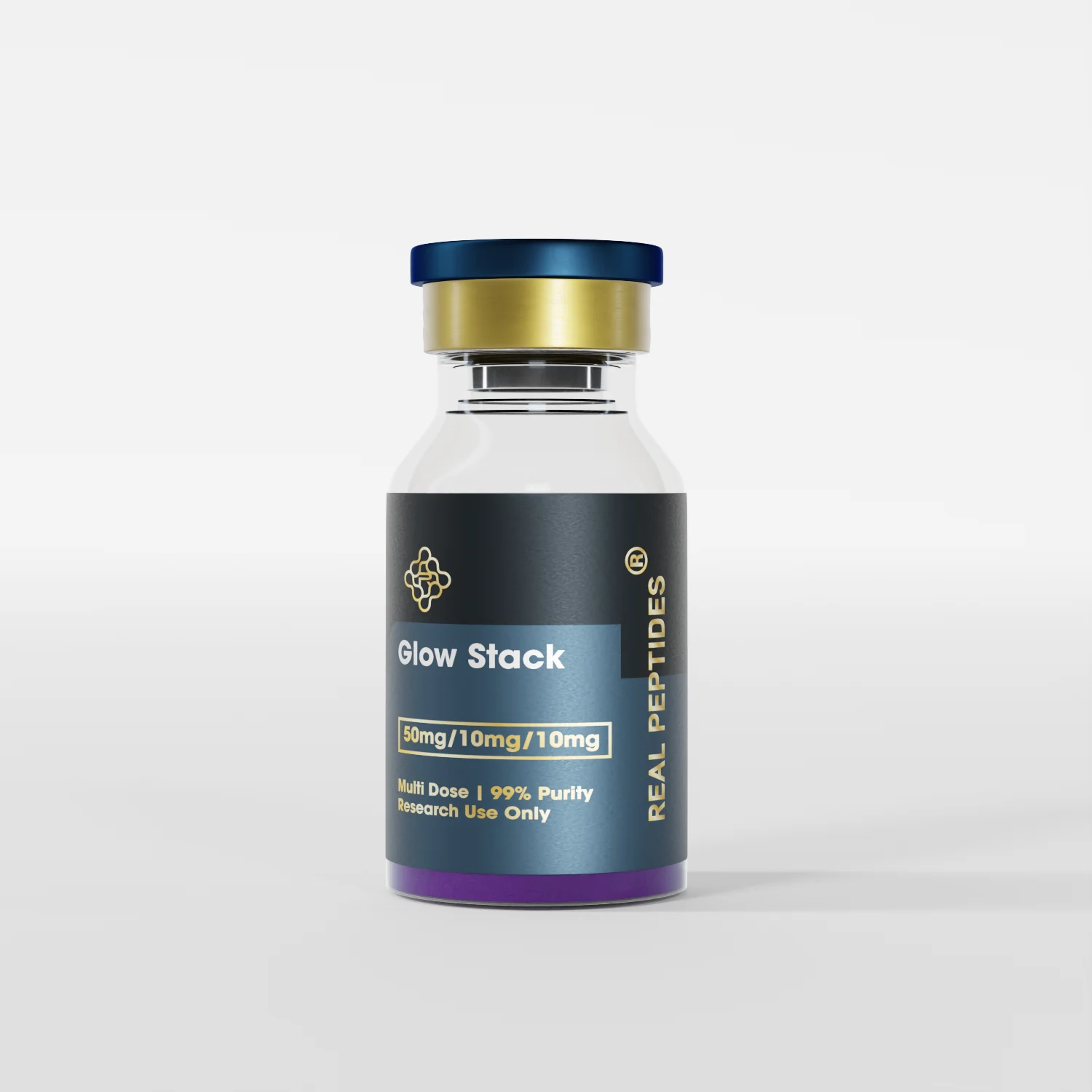
Zero controlled human trials have tested GHK-Cu, BPC-157 and TB-500 together, so all the glow peptide benefits you read about is borrowed from research on one component at a time. That research is real, but it is mostly lab dishes, rodents and small cosmetic studies on creams. The bundle that Real Peptides sells for $86.40 packs those three separate literatures into one order; it does not come with a combined body of evidence.
I compare vendors and COAs for a living, and the benefit claims are where storefronts go furthest beyond the data. Below is what each part has actually been studied for, sorted by the type of evidence, and what nobody has tested yet. None of the three compounds is FDA-approved, and nothing here is a treatment claim.
Glow peptide benefits are a marketing label: "glow" is a product name chosen by vendors, not an outcome measured in any study. No paper defines a glow effect, and no regulator recognises the stack as a medical product.
The name leans on the skin research behind GHK-Cu, which is the one part with a cosmetic history. BPC-157 and TB-500 were never studied as skin products in the way the name implies; their animal work sits in tendon, muscle, gut and tissue-repair models. When a sales page says the stack is "for skin, recovery and anti-aging," it is stitching three unrelated research areas into one promise.
GHK-Cu's research base covers skin, wound and collagen models, mostly in lab and animal work, plus small cosmetic studies on topical use. It is a copper-binding tripeptide found naturally in human plasma, and plasma levels fall with age, which is the starting point for most of the interest.
The cosmetic studies looked at creams and serums applied to skin. That matters, because the GLOW Stack contains a 50 mg vial of lyophilized powder, a different product with a different regulatory status. Findings on a face cream do not transfer to a research vial. We explain that split on the topical vs injectable GHK-Cu page, and the compound itself on the GHK-Cu guide.
Most of what is known about BPC-157 comes from rodent studies of tendon, muscle and gut tissue. It is a synthetic 15-amino-acid peptide derived from a protein in gastric juice, which is why gut models feature so heavily.
Human data is limited to small, uncontrolled studies. Those are useful for generating questions, but without a control group they cannot separate an effect of the peptide from natural recovery or expectation. Buyers often read "studied in humans" on a product page and assume it means proven in humans. It does not.
We cover the BPC-157 piece in more depth on BPC-157 in the GLOW Stack.
TB-500 has been studied in tissue-repair animal models, and human data is limited. It is a synthetic fragment related to thymosin beta-4, a protein the body makes on its own, but the fragment sold in vials is not the same as the full natural protein.
Vendors pair it with BPC-157 because the two are described as acting on different repair pathways in animal research. That pairing logic is a hypothesis drawn from separate studies, not a result from studies that combined them.
The quickest way to judge claimed glow peptide benefits is to ask what kind of study supports it. Here is how the three parts compare on the evidence that exists today.
| Component | Main body of evidence | Human data |
|---|---|---|
| GHK-Cu | Lab and animal work on skin, wound and collagen models | Small cosmetic studies on topical products only |
| BPC-157 | Rodent studies on tendon, muscle and gut | Small uncontrolled studies |
| TB-500 | Tissue-repair animal models | Limited |
| All three combined | None published | None published |
The last row is the one that matters for anyone pricing the stack. In our reading, the combined evidence column is empty.
A claim about glow peptide benefits deserves trust only when you can trace it to a study type and a species. These are the checks we run on every vendor page before we link to it:
If a claim fails two of these, I would treat the whole page with suspicion. For the safety side of the same question, see glow peptide side effects, and if you are considering anything for your own health, talk to your doctor first.
Zero controlled human trials have tested GHK-Cu, BPC-157 and TB-500 together, so all the glow peptide benefits you read about is borrowed from research on one component at a time. That research is real, but it is mostly lab dishes, rodents and small cosmetic studies on creams. The bundle that Real Peptides sells for $86.40 packs those three separate literatures into one order; it does not come with a combined body of evidence.
I compare vendors and COAs for a living, and the benefit claims are where storefronts go furthest beyond the data. Below is what each part has actually been studied for, sorted by the type of evidence, and what nobody has tested yet. None of the three compounds is FDA-approved, and nothing here is a treatment claim.
Glow peptide benefits are a marketing label: "glow" is a product name chosen by vendors, not an outcome measured in any study. No paper defines a glow effect, and no regulator recognises the stack as a medical product.
The name leans on the skin research behind GHK-Cu, which is the one part with a cosmetic history. BPC-157 and TB-500 were never studied as skin products in the way the name implies; their animal work sits in tendon, muscle, gut and tissue-repair models. When a sales page says the stack is "for skin, recovery and anti-aging," it is stitching three unrelated research areas into one promise.
GHK-Cu's research base covers skin, wound and collagen models, mostly in lab and animal work, plus small cosmetic studies on topical use. It is a copper-binding tripeptide found naturally in human plasma, and plasma levels fall with age, which is the starting point for most of the interest.
The cosmetic studies looked at creams and serums applied to skin. That matters, because the GLOW Stack contains a 50 mg vial of lyophilized powder, a different product with a different regulatory status. Findings on a face cream do not transfer to a research vial. We explain that split on the topical vs injectable GHK-Cu page, and the compound itself on the GHK-Cu guide.
Most of what is known about BPC-157 comes from rodent studies of tendon, muscle and gut tissue. It is a synthetic 15-amino-acid peptide derived from a protein in gastric juice, which is why gut models feature so heavily.
Human data is limited to small, uncontrolled studies. Those are useful for generating questions, but without a control group they cannot separate an effect of the peptide from natural recovery or expectation. Buyers often read "studied in humans" on a product page and assume it means proven in humans. It does not.
We cover the BPC-157 piece in more depth on BPC-157 in the GLOW Stack.
TB-500 has been studied in tissue-repair animal models, and human data is limited. It is a synthetic fragment related to thymosin beta-4, a protein the body makes on its own, but the fragment sold in vials is not the same as the full natural protein.
Vendors pair it with BPC-157 because the two are described as acting on different repair pathways in animal research. That pairing logic is a hypothesis drawn from separate studies, not a result from studies that combined them.